 Skip to content





AC Repair In Arlington, VA Keeps Your Property Cool and Comfortable
DR HVAC Inc provides 24/7 AC repair for homes and businesses throughout Arlington as part of our broader AC repair coverage throughout Northern Virginia. We diagnose central air conditioners, heat pumps, and ductless mini-splits to identify the real problem. Before we begin any repair, we explain our findings, discuss your options, and get your approval.
AC Repair Experts for Homes and Businesses Across Arlington
When your AC blows warm air, runs nonstop, or stops working, the cause is not always obvious. Different faults can create similar symptoms, so our technicians test the system before recommending a repair.
DR HVAC Inc is a licensed and insured HVAC company serving Arlington from Dumfries, Virginia. Our approach reflects more than 20 years of hands-on industry experience. We explain what failed, discuss practical options, and complete only the work you approve.
We serve residents, property managers, and businesses throughout Arlington, including Ballston, Clarendon, Rosslyn, Crystal City, and nearby communities. Coverage also includes properties near Ballston Quarter, Pentagon City, and the Village at Shirlington. Our location is approximately 43 minutes from Arlington, depending on traffic.

Complete AC Repair Services for Every Arlington Cooling System Type

Central Air Conditioner Repair
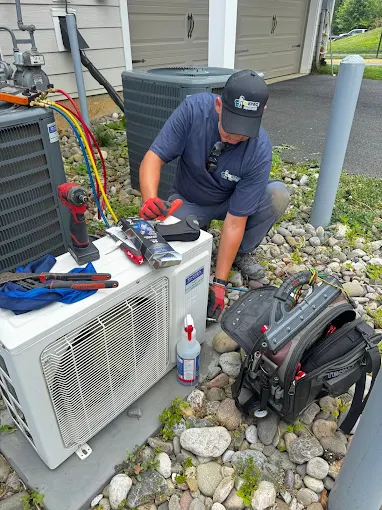
Restore steady cooling throughout your property when a central AC system loses performance. We inspect the indoor and outdoor equipment, airflow, thermostat, electrical components, coils, and refrigerant circuit. We base the repair on test results and the condition of the complete system.

Heat Pump Cooling Repair
Regain reliable summer comfort with professional heat pump repair and service. We troubleshoot systems that blow warm air, run constantly, freeze, cycle too often, or fail to start. Testing may include the reversing valve, controls, coils, motors, airflow, and refrigerant performance.

Ductless Mini-Split Repair
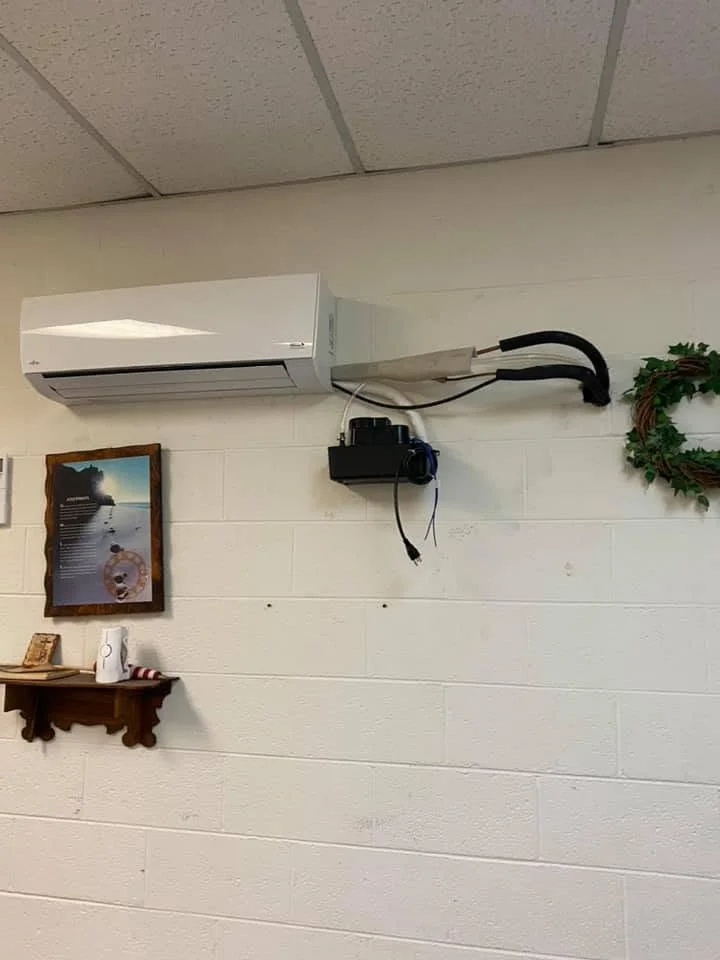
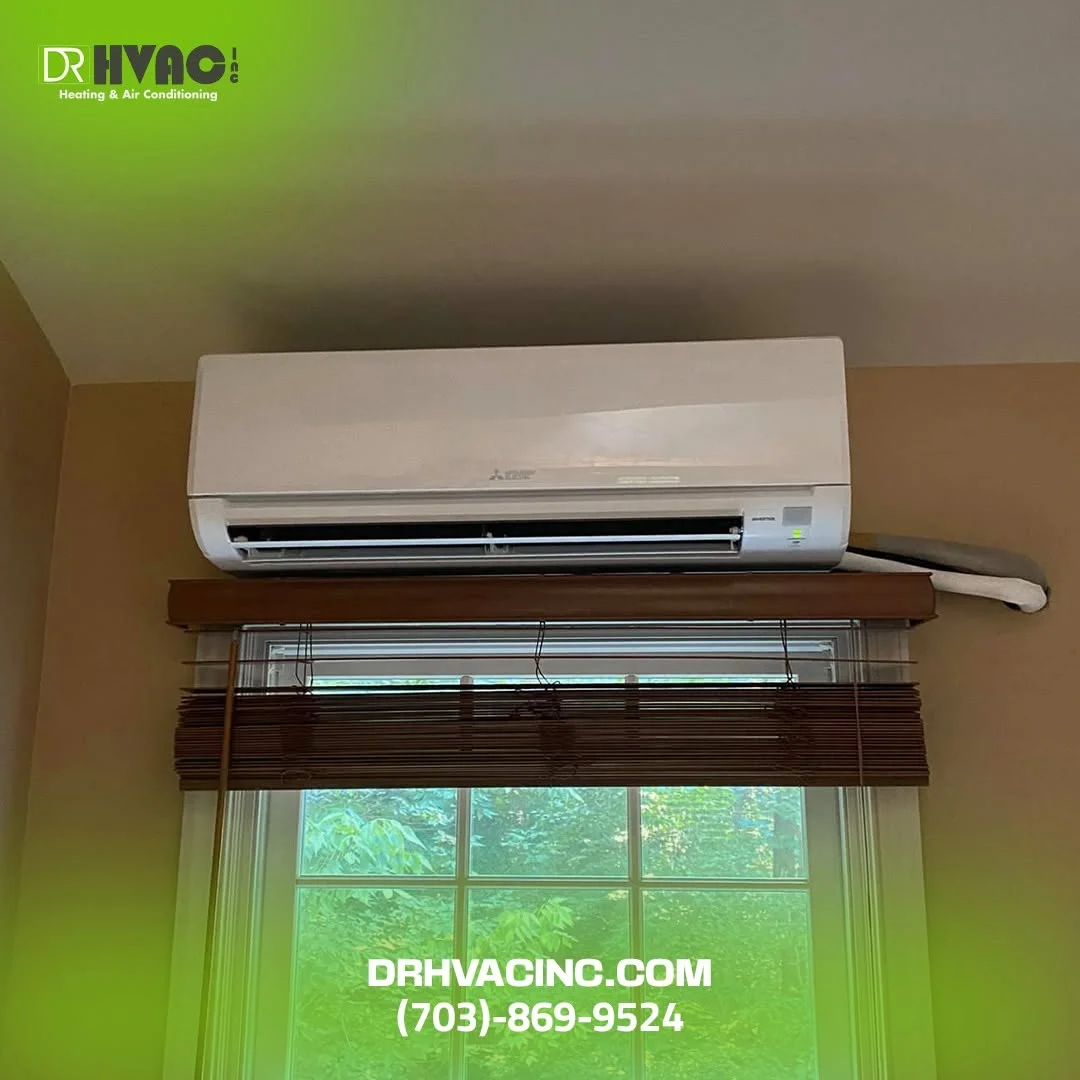
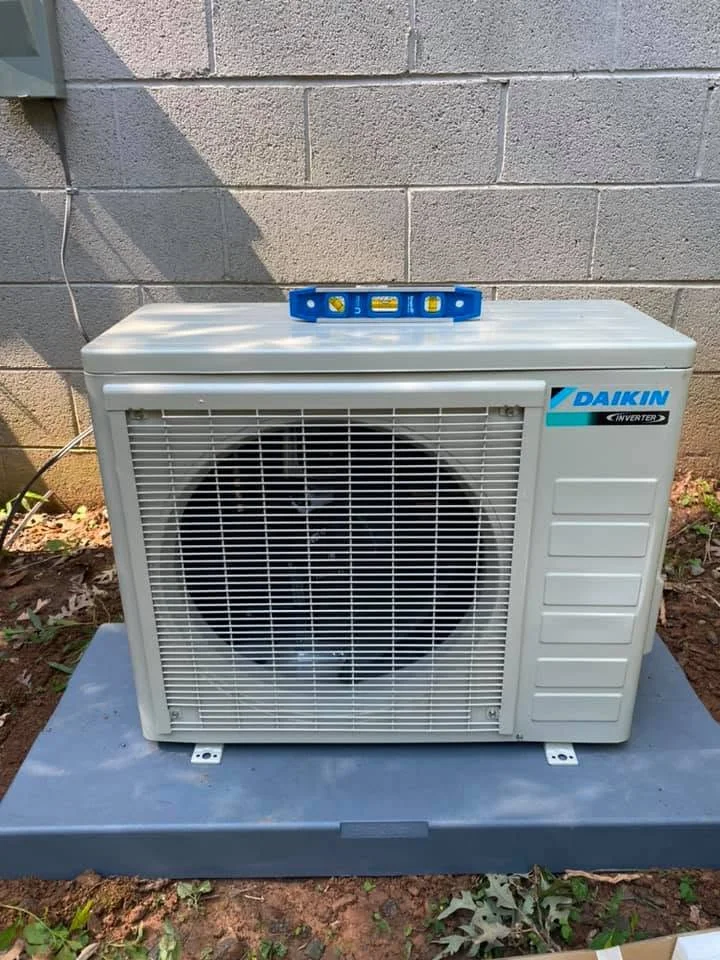
Bring comfortable temperatures back to individual rooms or zones with professional ductless mini-split service. We repair weak cooling, leaking indoor units, communication errors, unusual noises, and control problems. We check each indoor head and the shared outdoor unit to locate the source of the failure.

Refrigerant Leak Repair
Protect your compressor and restore cooling by addressing the source of refrigerant loss. An AC system should not need regular refrigerant refills. We locate the leak, assess whether the affected part can be repaired, and explain the options before charging the system to the required level.

Electrical and Thermostat Repair
Restore safe startup and accurate temperature control with professional thermostat repair and replacement. We also test capacitors, contactors, wiring, disconnects, motors, and control boards as needed. We base electrical work on measured results instead of replacing several parts to see what works.

Commercial Cooling System Repair
Reduce disruption inside offices, stores, restaurants, and other light-commercial properties. We troubleshoot commercial split systems, packaged equipment, and rooftop units within our service capabilities. Our inspection considers operating schedules, building access, temperature control, and occupant needs.
Residential AC Repair Services for Arlington Homes, Condos, and Townhouses

Keep every level and living area comfortable with residential AC repair tailored to your property. Arlington homes include single-family houses, townhomes, condos, and apartments with different equipment locations, duct layouts, and access rules. We inspect the actual system instead of assuming every home cools the same way.
Condo and apartment service may require access approval or coordination with building management. Townhomes and multi-level houses may have uneven temperatures caused by airflow, duct, insulation, or equipment problems. Our technician explains what belongs to the AC system and what may involve the building or another trade.
- Central AC diagnostics for whole-home cooling problems
- Heat-pump repair for systems that heat and cool
- Ductless service for individual rooms and comfort zones
- Thermostat and airflow checks for uneven indoor temperatures
Get Emergency AC Repair in Arlington Before Cooling Problems Worsen
Do not wait when cooling loss, electrical odors, severe noises, or heavy leaking threatens your property. DR HVAC Inc provides 24/7 emergency AC repair in Arlington. Call (703) 869-9524, explain what happened, and follow any safety instructions our team provides.

Commercial AC Repair Services for Arlington Businesses and Managed Properties

Maintain a comfortable setting for employees, customers, tenants, and visitors. A cooling failure can affect daily work, customer experience, equipment, and occupied spaces.DR HVAC Inc provides commercial HVAC services for offices, retail locations, restaurants, and other light-commercial properties, including qualifying AC repairs throughout Arlington.
Commercial service begins with the building schedule, affected areas, equipment type, and access requirements. We communicate findings with the approved contact and explain the work before it begins. For managed properties, confirm roof, mechanical-room, parking, and building-entry requirements when scheduling.
- Commercial rooftop and packaged AC service
- Split-system troubleshooting and repair for businesses
- Thermostat, control, and indoor comfort issues
- Preventive maintenance plans for light-commercial cooling systems

DR HVAC Inc Reputation
EXCELLENT Based on 356 reviews
 Posted on Google
 Andy HarrisonMy outdoor A/C unit stopped working on a day with 100° weather. The tech arrived in less than an hour after my phone call. Problems were diagnosed and resolved, and my house was cooling again in 45 minutes. This was exceptional. I appreciate the quick response, fair prices, and the effort on such a hot day.Posted on Google
 K CatThank you Amine! Our ac went out and we needed help fast with the high heat. Amine came out immediately and knew how to fix it right away. He was knowledgeable, courteous, and had it up and running in a short time. We really appreciate you! Joe & KristiPosted on Google
 Said ZiaThey did a wonderful job replacing my broken condenser coil. Everything was explain to me from the issue to how it needs to be fixed. They were very courteous and had great energyPosted on Google
 Adrian HarrisTop notch service and Amine is a true expert at his craft. Worked through a complicated HVAC repair over a couple months and was kept well informed throughout. Highly recommend for dedication to customer service, price and professionalism!Posted on Google
 HavalGreat service provided and very reasonable prices offered after having to buy and install a new AC Unit! After several days since we installed the new AC unit by Dr HVAC everything has been running great and the house has been very cool even with the scorching hot weather this summer! As such, we decided to call and schedule another appointment to have maintenance done with cleaning up our coil indoors and they provided great services once again! 2026 Update: After a couple years, we noticed that our indoor AC Unit wasn't running consistent. Sometimes the AC would blow cold air and sometimes it wouldn't. We called Dr HVAC Inc since they helped with the outdoor installation the last time around and they found out that the motor for the indoor unit was blown out and not working. Amine told us he would order a newer model for the indoor AC unit and get his team on it right away. In less than 2 days, he got the new parts ordered from out of the state and worked tirelessly to replace our old unit before the heat wave approached over the weekend. Not only that, but they also replaced our outdated Water heater unit all in the same day since we had a ongoing leak issue. Amine and his team did a FANTASTIC job overall! Their work was Professional and Precise throughout the day. We are thankful for their dedicated hard work and highly recommend them to anyone looking for reliable HVAC services!Posted on Google
 Isolde WasleyI am extremely pleased with the Dr Hvac inc SERVICE. They arrived on time, were very courteous, kept us informed while they installed our new AC system. They gave us a very good price. I highly reco.mend this company.Posted on Google
 Jada NewtonDr. HVAC saved the day!! My husband and I are recent homebuyers, and we were crushed when our AC stopped working right before the summer heat. From the very first consultation, Dr. HVAC and his team were responsive, professional, informative, and incredibly reassuring. They gave us a fast installation timeline and a very reasonable price for a full system replacement. After the installation, they also identified that our home’s piping was outdated and could affect the performance of the new unit. To protect our investment, they came back the very next day and repiped the house. Everything was completed neatly, efficiently, and with great attention to detail. The level of professionalism, care, and follow-through we experienced was outstanding from start to finish. I truly have no complaints and would absolutely recommend Dr. HVAC to anyone in need of HVAC services. We’re so grateful we found them!Posted on Google
 Alex OlmosAmine and his team delivered quality customer service and equipment installation. My whole HVAC system was outdated and he gave me a no-filter and straight to the point evaluation of what was going on with no fluff. With the heat coming in and having no AC he prioritized my home’s HVAC replacement and followed through with his work in only 3 days! Looking at other HVAC contractors and receiving their quotes for the same work, Dr HVAC had the most competitive pricing and provided a premium service! The team was very polite, professional, and worked efficiently in ensuring no mess was left in my home and completing their work in a timely manner. I highly recommend Dr HVAC for everyone, their hustle and dedication to ensuring the customer is fully comfortable and satisfied with their needs is like no other.Posted on Google
 Nelson SchuckThese guys are awesome. Hands down the best experience i have ever had with a contractor. They arrived early. Did their job fast. Talked me threw the ins and outs. Left me with a product in my house that i was proud of. I would never call another HVAC company besides this one unless i had to
Emergency AC Repair in Arlington Available Twenty-Four Hours Every Day
Emergency AC repair is appropriate when waiting could increase a safety risk, threaten the property, or create dangerous indoor heat. DR HVAC Inc is available 24 hours a day for urgent cooling problems in Arlington. Response time depends on location, weather, call volume, access, and the current schedule.
Turn the AC off if you see smoke, smell burning material, hear severe grinding, notice heavy leaking near finished surfaces, or experience repeated breaker trips. Do not open an electrical panel or attempt to handle refrigerant. Share the symptoms when you call so the service team can provide safe next steps.
- Complete cooling loss during dangerous outdoor heat
- Burning smells, smoke, or repeated breaker trips
- Heavy leaking near ceilings, walls, or finished floors
- Severe grinding, electrical buzzing, or visible system icing


AC Problems Our Arlington Repair Technicians Handle Every Day
Failed Capacitors and Contactors
Capacitors help motors start and run, while contactors control power to key components. A failed component may leave the outdoor unit humming, prevent a fan from starting, or stop cooling completely. Proper electrical testing confirms whether the part has failed.
Refrigerant Leaks and Low Charge
Refrigerant moves heat from inside the property to the outdoor air. A leak can reduce cooling, cause ice, increase run time, and stress the compressor. Adding refrigerant without addressing the leak usually provides only temporary relief.
Frozen Evaporator Coils
Ice on the indoor coil prevents normal heat transfer and may block airflow. Common causes include restricted airflow, a dirty filter, blower trouble, coil contamination, or low refrigerant. The ice must thaw before the technician can test the system correctly.
Clogged Condensate Drains
Your AC removes moisture and sends it through a drain line. Algae, dirt, or debris can block that line, allowing water to back up or activate a safety switch. Inspect the drain, pan, and nearby components before the system returns to service.
Blower and Condenser Fan Failures
The indoor blower moves conditioned air through the property, while the outdoor fan helps release heat. Worn motors, damaged blades, weak capacitors, and electrical faults can reduce cooling or stop airflow. Continuing to run it can add stress to other components.
Thermostat and Control Board Faults
The thermostat and control board tell the AC when and how to operate. Incorrect readings, loose wiring, failed relays, communication errors, or control damage can cause poor cooling or irregular cycles. Testing helps separate control issues from mechanical failure.

14318 Lindendale Rd, Woodbridge, VA 22193
3424 Belleplain Ct, Dumfries, VA 22026
(703) 869-9524
doctor.hvacinc@gmail.com
- Business Hours
Monday to Sunday
open 24 hours
- 24/7 Emergency HVAC Service
- Licensed & Insured
- VA License #27105172155
- Serving Dumfries & Northern Virginia
Our Four-Step AC Repair Process for Customers Throughout Arlington, Virginia
Call DR HVAC Inc or request service online. Tell us the property address, what the AC is doing, when the problem began, and any access instructions. Clear details help the team prepare for the visit.
The technician reviews the reported symptoms and tests the related equipment. The inspection may cover the thermostat, airflow, electrical parts, coils, drain, motors, outdoor unit, temperature change, and refrigerant performance. Testing depends on the system and problem.
You receive an explanation of what the testing found and which repair options apply. The technician can also identify concerns to monitor. You approve the selected work before the repair begins.
The technician completes the approved repair and tests system operation. Final checks may include startup, thermostat response, airflow, temperature change, drainage, and normal cycling. Some repairs require ordered parts or a return visit.

Why Arlington Customers Choose DR HVAC Inc for AC Repair

Experienced Owner Involvement
Owner Amine Halloul brings more than 20 years of hands-on HVAC experience. That background supports practical troubleshooting, clear customer education, and decisions based on how the complete system is performing.
Licensed and Insured Service
DR HVAC Inc operates as a licensed and insured Virginia HVAC company. Customers should be able to verify contractor information and understand who is responsible for repairs at their property.
Strong Customer Reputation
Hundreds of Google reviews provide useful evidence about real customer experiences. Common themes include communication, professional service, quick help, helpful explanations, and care during repairs and installations.
Practical Repair Recommendations
Not every cooling problem requires system replacement. We consider the failed part, system condition, warranty, repair history, comfort, and cost before explaining the available choices.
Respect for Your Space
Your property remains active during many service visits. Our technicians work with care around homes, tenants, employees, customers, and managed areas while keeping the approved contact informed.
Knowledge of Major Cooling Systems
Different systems require different tests, parts, and repair methods. Our work covers common central air conditioners, heat pumps, ductless mini-splits, and qualifying light-commercial equipment from leading manufacturers.
What Affects the Cost of AC Repair in Arlington, Virginia
AC repair cost in Arlington depends on the diagnosis, not the symptom alone. Warm air can result from a thermostat setting, a failed capacitor, a refrigerant leak, a fan problem, or compressor failure. Each repair requires different parts, tools, labor, and testing. A system inspection is needed before a technician can provide an accurate repair price.
A standard electrical component usually costs less to replace than a compressor, coil, motor, or control board. The technician must test the component before pricing the correct repair.
Central AC, heat pumps, ductless equipment, and commercial units use different parts. Older equipment may also require more time to identify compatible replacements.
Equipment inside a tight mechanical closet, attic, roof area, or managed building may require additional access planning and labor.
Available parts, shipping needs, equipment model, and manufacturer warranty can affect the final cost. A parts warranty may not cover labor or diagnostic work.
Emergency, evening, weekend, and peak-season service may be priced differently from a scheduled visit. Ask about applicable charges when booking.
Intermittent faults or several related symptoms may require more testing than a clear component failure. Accurate diagnosis helps prevent payment for the wrong repair.
Should You Repair or Replace Your AC System in Arlington
Repair often makes sense when the system is newer, has been reliable, and needs a limited repair. Consider air conditioner replacement options when major parts fail, breakdowns repeat, comfort remains poor, or the repair cost is high compared with a properly installed new system. Age matters, but it should not decide the answer alone.
| Repair may make sense when | Replacement may deserve consideration when |
|---|---|
| The equipment is newer | The equipment is near the end of its expected life |
| The problem involves one serviceable part | A compressor or coil has failed outside warranty |
| The system cooled well before the failure | The property had ongoing comfort or humidity problems |
| Parts remain available | Compatible parts or refrigerant are difficult to obtain |
| Warranty coverage reduces the repair cost | Breakdowns and repair costs continue to increase |
Book Reliable HVAC Services Today
Call Us
Got questions that need answered? Give us a call today.
Chat Live
A service pro that you can chat with online? Yep, that's us...
Book Online
Ready to book? Pick a service and time that work for you.
Six Warning Signs Your Arlington Property Needs Professional AC Repair
Warm Air From Vents
Airflow without cooling means the AC is not moving heat as expected. First, confirm that the thermostat is set to cooling mode. If warm air continues, schedule system testing.
Weak Airflow Indoors
Low airflow can leave some rooms warmer than others and cause longer cooling cycles. A dirty filter is one possible cause, but blower, coil, or duct problems may also be involved.
Frequent On-and-Off Cycling
An AC that starts and stops too often may have a control, airflow, electrical, refrigerant, or sizing problem. Frequent startups add wear to key components.
New Sounds or Odors
Buzzing, grinding, squealing, musty odors, and burning smells signal a change in operation. Shut the system off and call immediately if you notice smoke or an electrical odor.
High Indoor Humidity
The AC should remove moisture while it cools. High humidity may point to short cycles, airflow trouble, equipment sizing, or reduced cooling performance.
Rising Bills Without Better Comfort
Higher electricity use combined with poor comfort can indicate that the system is running longer than before. Compare similar weather periods and arrange an inspection if the change continues.
Understanding Arlington Properties and Their Unique Cooling System Requirements

Arlington combines high-rise buildings, mixed-use properties, older detached houses, townhomes, and low-rise residential communities. These property types can place cooling equipment in mechanical closets, attics, basements, roof areas, balconies, or shared utility spaces. Each setting requires a different approach to access and system testing.
Cooling equipment also varies by building age and use. Condos may have compact indoor units or building access rules. Older houses may have limited duct space or temperature differences between floors. Offices and mixed-use properties may rely on rooftop, packaged, or shared building systems.
DR HVAC Inc serves Arlington from its Dumfries base and works with customers to understand property access before arrival. Condo residents and commercial contacts should share parking, loading, roof, mechanical-room, front-desk, and building-management instructions when scheduling. Service availability depends on the equipment and address.
Complete HVAC Services for Year-Round Comfort
Cooling Services
- AC Installation
- AC Repair
- AC Maintenance
- Ductless Mini-Split Systems
- AC Replacement
Heating Services
- Furnace Installation & Repair
- Heat Pump Services
- Heating Repair
- Emergency Heating Repair
- Boiler Installation & Upgrades
Indoor Air Quality
- Indoor Air Quality Systems
- Air Purification & Filtration
- Duct Cleaning & Sealing
- Humidifiers & Dehumidifiers
- Ventilation Solutions
Commercial HVAC
- Commercial HVAC Services
- Commercial HVAC Installation
- Commercial HVAC Repair
- HVAC Maintenance
- Emergency HVAC Repair
AC Repair Near You In Arlington, Virginia Neighborhoods and Communities

Searching for AC repair near me in Arlington, Virginia? DR HVAC Inc provides 24/7 cooling repair for local homes, condos, townhouses, offices, stores, and qualifying light-commercial properties. Tell us your address, system type, symptoms, and building access details so we can confirm service availability and the next step.
Arlington Neighborhoods We Serve
- Rosslyn
- Courthouse
- Clarendon
- Virginia Square
- Ballston
- Crystal City
- Pentagon City
- Columbia Pike
- Shirlington
- Lyon Village
- Westover
- Fairlington
- Cherrydale
- East Falls Church
Arlington ZIP Codes We Cover
- 22201
- 22202
- 22203
- 22204
- 22205
- 22206
- 22207
- 22209
- 22213
Nearby Landmarks and Recognizable Service Areas
- Ballston Quarter
- The Rosslyn corridor
- Clarendon
- Pentagon City
- Crystal City
- Columbia Pike
- The Village at Shirlington
Driving Directions From Arlington to DR HVAC Inc in Dumfries
Arlington House, The Robert E. Lee Memorial To DR HVAC Inc
Rocky Run Park To DR HVAC Inc
Schedule AC Repair in Arlington, VA With DR HVAC Inc
Restore comfortable indoor temperatures with professional AC repair for your Arlington home or business. Call DR HVAC Inc at (703) 869-9524 for 24/7 service, or request an appointment online. Tell us about the symptoms, property type, and access needs so our team can confirm the next step.
Frequently Asked Questions
How much does AC repair cost in Arlington, VA?
AC repair costs in Arlington depend on the failed part, system type, equipment age, access, warranty, and service time. A diagnostic visit identifies the cause before pricing the repair. Ask what testing and fees are included, then review the recommended work before approving. Emergency service may have different charges.
Who provides emergency AC repair near me in Arlington?
DR HVAC Inc provides 24/7 emergency AC repair for Arlington homes and light-commercial properties. Call (703) 869-9524 and describe the cooling loss, odors, noises, leaks, or electrical symptoms. Availability and arrival time depend on your address, building access, weather, call volume, and current scheduling.
Why is my AC running but not cooling properly?
An AC that runs but doesn’t cool may have restricted airflow, a frozen coil, low refrigerant, a failed outdoor fan, compressor trouble, or a thermostat problem. Check the filter and thermostat first. If you see ice, smell burning, have repeated breaker trips, or notice heavy leaks, turn the system off and request professional service.
What should I check before calling for AC repair?
Confirm that the thermostat is set to cool, the setpoint is below room temperature, the filter is not clogged, and supply vents are open. Check whether the breaker has tripped once and keep debris away from the outdoor unit. Do not open electrical panels or handle refrigerant. Call if normal operation does not return.
Should I repair or replace my old air conditioner?
Repair may be sensible when the system remains reliable and needs a limited, affordable fix. Consider replacement when major parts fail, breakdowns repeat, comfort stays poor, or parts are difficult to obtain. Compare age, warranty, refrigerant, repair cost, energy use, duct condition, and the complete replacement proposal.
Can an AC refrigerant leak be repaired safely?
Many AC refrigerant leaks can be repaired, but the location, component condition, refrigerant type, and cost determine whether repair makes sense. A sealed system should not need regular refills. The technician should locate the leak, explain the options, complete the approved repair, and charge the system to the required level.
Do you repair AC systems in Arlington condos?
Yes, DR HVAC Inc services many condo AC systems when the equipment falls within our repair scope and building access is available. Tell us whether the unit is inside a mechanical closet, on a roof, or connected to shared equipment. Confirm parking, entry, management approval, and technician access before the appointment.
Do you provide commercial AC repair throughout Arlington?
Yes, DR HVAC Inc provides AC repair for offices, retail spaces, restaurants, and other light-commercial properties in Arlington. We service qualifying split systems, packaged equipment, and rooftop units. Share the equipment type, affected areas, operating schedule, and access rules so our team can confirm service availability.
How long does an AC diagnostic appointment usually take?
Many AC diagnostic visits take about one to two hours, but complex or intermittent faults may take longer. Equipment access, system type, testing needs, and building rules also affect timing. Simple repairs may be completed during the visit, while ordered parts, coil work, or compressor problems can require a return appointment.
What AC brands and systems does DR HVAC Inc repair?
DR HVAC Inc repairs many central air conditioners, heat pumps, ductless mini-splits, packaged units, and light-commercial systems. Brands include Trane, Carrier, Lennox, Rheem, Goodman, York, Daikin, Mitsubishi, and American Standard. Service depends on the model, condition, warranty, refrigerant, and parts availability.
About Arlington, Virginia
Arlington sits across the Potomac River from Washington, DC. The city blends established residential communities with busy business districts and mixed-use areas. Rosslyn, Ballston, Clarendon, Crystal City, and Pentagon City each offer a different mix of houses, condominiums, offices, shops, and managed buildings.
Warm, humid summers can place added demand on cooling systems throughout Arlington. Older houses may struggle with uneven temperatures, while condominiums can have limited equipment space and building access requirements. Commercial properties may also depend on rooftop or packaged systems that require careful testing and service planning.
DR HVAC Inc provides AC repair for Arlington residents, property managers, and businesses. With more than 20 years of HVAC experience, our team diagnoses central air conditioners, heat pumps, ductless mini-splits, and qualifying commercial systems. We explain the problem clearly and recommend practical repair options.